
The Science of Storytelling by Muse Storyfirst
What This Course Delivers

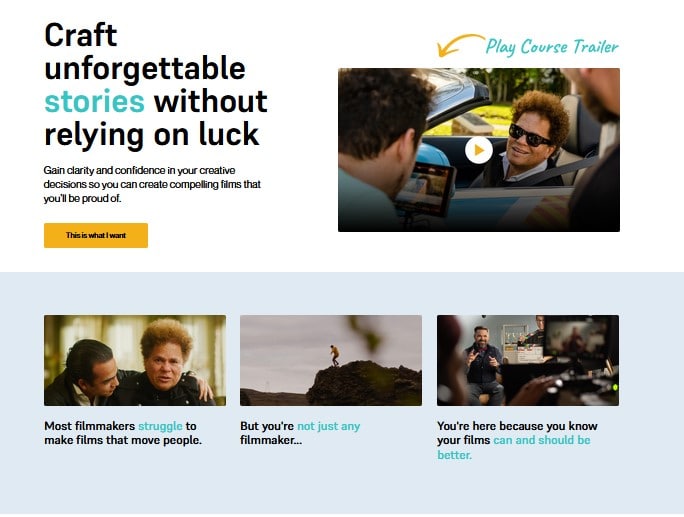
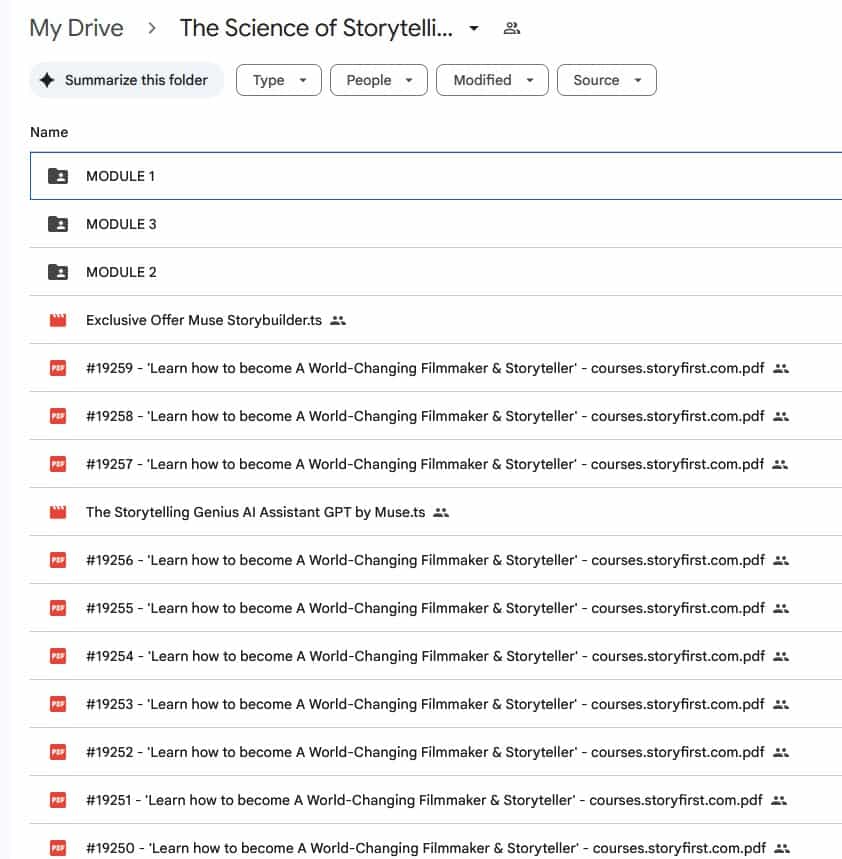
The Science of Storytelling is a 3-module video training program by Patrick Moreau, 5-time National Emmy Award-winning filmmaker and founder of Muse Storytelling. The course teaches research-backed narrative techniques for documentary filmmakers, combining psychology research with practical filmmaking methods. Includes 26 video lessons, 74 downloadable PDFs, 1 spreadsheet, and over 4 hours of video content totaling 3.44 GB.
Course Contents at a Glance
🎬 26 Video Lessons — 4h 14m 26s of training
📕 74 PDF Resources — Transcripts, academic research papers, workbooks, templates, and guides
📊 1 Spreadsheet — Character tracking tool
💾 Total Download: 3.44 GB
Why DownloadCoursesNow?
✅ Immediate Access — Download link delivered to your email within minutes of purchase
✅ 100% Complete & Updated — Every video, PDF, workbook, and bonus included as listed
✅ Secure Checkout — PayPal & Stripe protection with full buyer guarantee
✅ 30-Day Refund Policy — Complete refund if the course isn't delivered as described
✅ Verified by Screenshots — Proof of contents shown on every product page
What You Will Master in The Science of Storytelling
✅ Narrative Transportation Theory — How to structure documentary content that creates full audience immersion using academic research from the Journal of Media Psychology, moving beyond basic story arcs into psychological engagement techniques.
✅ The Four Pillars of Story Framework — Moreau's methodology for building documentary narratives around People, Plot, Purpose, and Place, with specific protocols for identifying which pillar to lead with based on subject matter.
✅ The Storyfinding Process — A systematic interview and discovery method developed through Muse's Emmy-winning work with Apple, Four Seasons, and Nike, designed to extract authentic narrative elements before production begins.
✅ Character Development Using The Big 3 Things — How to profile documentary subjects by identifying their core motivations, values, and conflicts through structured pre-production tracking and the included Character Tracking Spreadsheet.
✅ Plot as Curiosity Design — Structuring documentary timelines to maintain viewer engagement through strategic information revelation rather than chronological storytelling.
✅ Purpose-Driven Keyword Identification — Extracting the thematic keywords that guide editing decisions, based on Schwartz's Model of Human Values research included in the course materials.
✅ The 7 Types of Stories — Classifying documentary subjects into seven narrative categories to match production approach with story type, covered in Module 2 with accompanying PDF framework.
✅ Storyboarding for Documentary — Pre-visualization techniques adapted for non-scripted content, with sample storyboards from the Emmy-nominated film “I Am Dust” included as reference material.
✅ The Hook and Jab Structure — Moreau's opening sequence framework for documentary films that establishes emotional connection within the first 90 seconds while introducing narrative stakes.
✅ Wrapping Plot in Place — Using location and environment as narrative devices rather than passive backgrounds, with protocols for scouting and shooting place-based storytelling.
Who Is The Science of Storytelling Designed For?
- The Corporate Documentary Filmmaker — You're getting hired by brands and organizations to create internal culture films or external marketing documentaries, but your work feels more like polished interviews than compelling stories. Clients say they want “something like a Netflix documentary” but you're not sure how to translate unscripted content into cinematic narrative. Module 2's Storyfinding Manual provides the pre-production interview framework that Muse uses for clients like Apple, extracting story structure before the camera rolls.
- The Wedding and Event Videographer Transitioning to Story-Based Work — You have strong technical skills and a client base, but you're shooting coverage-style rather than narrative-driven films. You want to charge premium rates for story-focused work but don't have a repeatable process for finding story in real people's lives. The Character Tracking system in Module 2 and the Purpose as Keywords methodology in Module 3 give you the structure to identify narrative threads during discovery calls, not just in the edit.
- The Nonprofit Video Producer — You're creating films for mission-driven organizations where the stories matter deeply, but your final cuts feel like informational presentations rather than emotionally resonant narratives. You interview compelling subjects but struggle to structure their experiences into something that moves audiences to action. Module 1 covers the peer-reviewed research on narrative persuasion and identification theory that explains why some stories change behavior while others just inform.
- The Documentary Filmmaker with Strong Concepts but Weak Execution — You can identify important stories worth telling, but your films lack the emotional impact you envision. You're not sure why some scenes land while others fall flat, and you edit intuitively rather than systematically. Modules 3's Creative Milestones framework breaks documentary production into three decision points—Keywords, Character Selection, and Storyboards—giving you a replicable process rather than relying on instinct.
- The Film School Graduate or Self-Taught Filmmaker — You understand narrative filmmaking for scripted content, but documentary storytelling feels like a completely different discipline. You're not sure how to apply three-act structure to real events that didn't follow a script, or how to build character arcs when you can't control what your subjects say. The Two Critical Forces model in Module 1 reframes story theory specifically for non-fiction content, distinguishing between authored narrative and discovered narrative.
Full Curriculum Breakdown
Module 1: The Science of Story (8 video lessons, 14 PDFs | 1h 18m 21s)
This module establishes the psychological and academic foundation for narrative filmmaking. Moreau presents research from the Journal of Media Psychology and peer-reviewed studies on narrative persuasion to explain why story-based content creates measurable behavior change compared to informational content.
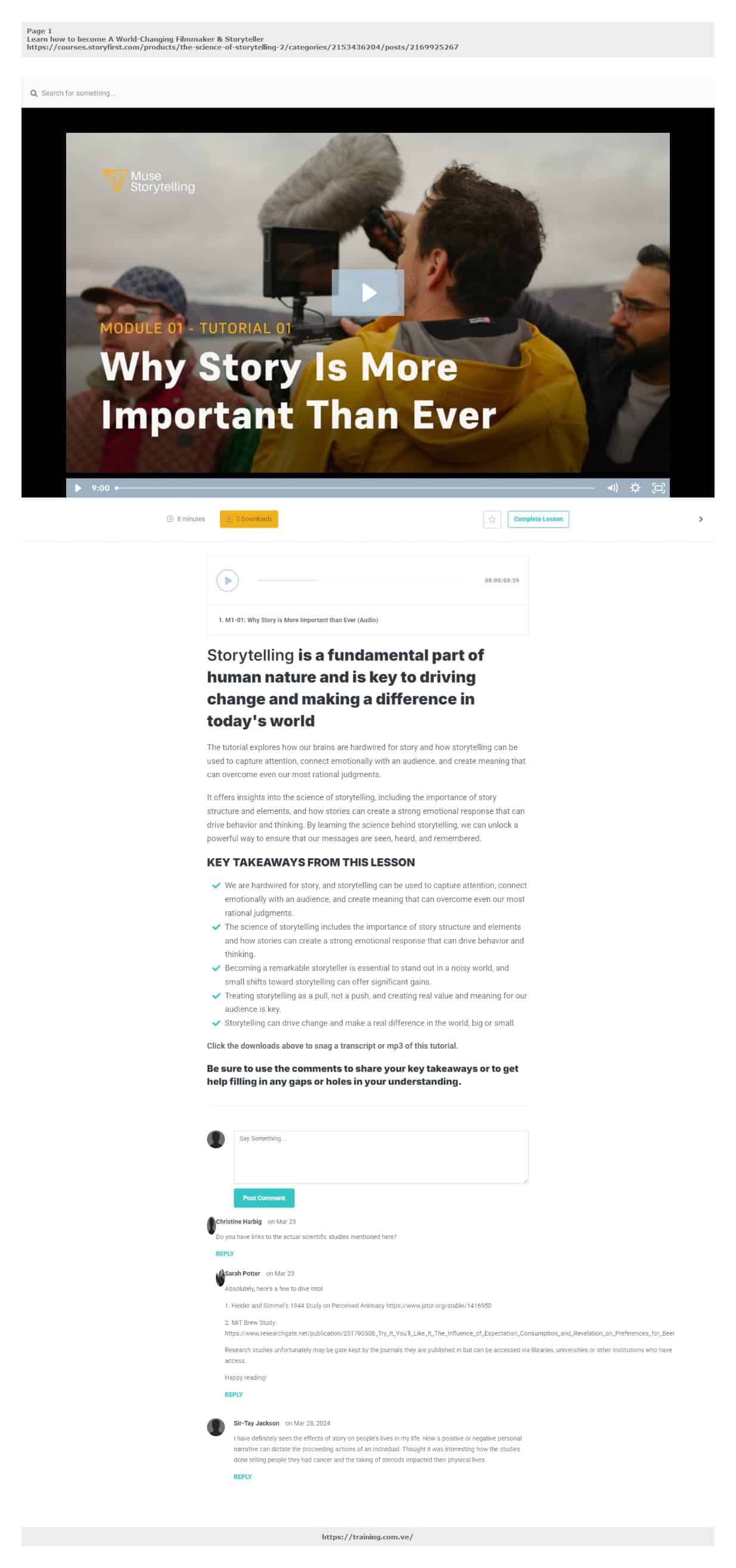
- Lesson 1.1: Why Story is More Important than Ever
- Lesson 1.2: What Exactly Is A Story
- Lesson 1.3: Who You're Learning From
- Lesson 1.4: Two Critical Forces in Story
- Lesson 1.5: The Four Pillars Of Story
- Lesson 1.6: The Science of Storytelling (Part 1)
- Lesson 1.7: The Science of Storytelling (Part 2)
- Lesson 1.8: An Overview Of The Process
📕 Resources: 8 lesson transcripts, plus 6 academic research papers including “A Conceptual Framework of Narrative Persuasion,” “Identification and Perspective in Narrative Persuasion,” “Enhancing Attitudes Toward Stigmatized Groups With Movies,” “Sympathy and Callousness,” and studies from Media Psychology journal on how story characters' motivations influence audience interest.
Module 2: Storyfinding — Discovering Narrative Before Production (8 video lessons, 15 PDFs, 1 spreadsheet | 1h 02m 56s)
The Storyfinding methodology is Muse's pre-production process for extracting story structure from real subjects through systematic discovery. This module teaches interview protocols, subject analysis frameworks, and the classification system for matching production approach to story type.
- Lesson 2.1: Shifting Your Approach to Filmmaking
- Lesson 2.2: Storyfinding 101
- Lesson 2.3: People As The Big 3 Things
- Lesson 2.4: Plot As Curiosity
- Lesson 2.5: Purpose as the Keywords
- Lesson 2.6: Places As Authenticity
- Lesson 2.7: Step By Step Storyfinding Process Walkthrough
- Lesson 2.8: The 7 Types Of Stories
📕 Resources: 8 lesson transcripts, Muse Storyfinding Manual (2023 edition), Character Tracking Guide, Outreach Templates for subject recruitment, Ultimate List of Questions (WCF Storyfinding edition), Schwartz's Model of Human Values reference, 7 Types of Story Overview framework.
📊 Spreadsheet: Character Tracking Spreadsheet for documenting subject interviews and identifying Big 3 Things.
Module 3: Storybuilding — From Discovery to Finished Film (8 video lessons, 14 PDFs | 1h 26m 10s)
This module translates Storyfinding discoveries into production and editorial decisions through Muse's Three Creative Milestones system. Lessons cover pre-production planning tools including keyword development, character role assignment, and storyboard templates adapted for documentary workflows.
- Lesson 3.1: The Three Creative Milestones
- Lesson 3.2: Developing Your Story Keywords
- Lesson 3.3: Choosing Your Lead Character
- Lesson 3.4: Additional Character Roles
- Lesson 3.5: Developing Your Storyboards
- Lesson 3.6: The Hook and Jab
- Lesson 3.7: Wrapping Plot In Place
- Lesson 3.8: Making Your First Film With Muse
📕 Resources: 8 lesson transcripts, WCF Character Brief template, WCF Character Brief Sample (completed example), WCF Keywords worksheet, WCF Keywords Sample, WCF Storyboards printable template, Sample Storyboards from the film “I Am Dust” (55-page PDF with complete pre-production storyboard breakdown).
Bonus Content
✅ Exclusive Offer: Muse Storybuilder — 16-minute video introducing Muse's advanced Storybuilder tool, an extended training program for implementing the methodology on client projects.
✅ The Storytelling Genius AI Assistant GPT by Muse — 10-minute walkthrough of Muse's custom GPT for applying the course frameworks using AI assistance during pre-production and editing.
About Patrick Moreau

Patrick Moreau is a 5-time National Emmy Award-winning filmmaker and the founder of Muse Storytelling, a production company specializing in science-backed narrative techniques for brands and mission-driven organizations. Before launching Muse, Moreau studied psychology and became interested in understanding the neurological mechanisms behind narrative engagement—why certain stories create lasting behavior change while others are forgotten within hours.
His early work in the wedding film industry led to a viral video that caught the attention of Canon, which turned one of his wedding films into a national commercial. This opened doors to creating documentary content for global brands including Apple, Nike, and Four Seasons, as well as filming for the United Nations headquarters in Geneva. Moreau's approach blends traditional documentary filmmaking with academic research, collaborating with researchers at Boise State University to test narrative hypotheses and publishing findings in the Journal of Media Psychology.
Verified Credentials:
✅ 5-time National Emmy Award Winner — Recognition from the National Academy of Television Arts & Sciences for documentary and narrative non-fiction work.
✅ Published in Academic Journals — Co-authored research on narrative persuasion and identification theory published in the Journal of Media Psychology.
✅ Research Partnership with Boise State University — Ongoing collaboration to test storytelling hypotheses in controlled studies, bringing academic rigor to commercial filmmaking practices.
✅ Taught at the United Nations — Invited to present the science of storytelling framework at the United Nations headquarters in Geneva, Switzerland.
✅ Global Client Portfolio — Created films for Apple, Nike, Four Seasons Hotels, and other Fortune 500 brands using the Storyfinding methodology.
✅ Trained Over 10,000 Filmmakers — Muse's online training programs have been completed by documentary filmmakers, videographers, and video marketers across 100+ countries.
✅ Featured in Filmmaking Media — Interviewed on podcasts and publications including Filmmakers Academy and ProVideo Coalition about applying psychology research to visual storytelling.
What Problems Does The Science of Storytelling Solve?
“I interview compelling subjects but my final films feel more like informational videos than emotionally engaging stories” — Module 2's Storyfinding system addresses this by shifting discovery from fact-gathering to narrative extraction. The Character Tracking Spreadsheet and Ultimate List of Questions guide you to identify your subject's internal conflict, transformation arc, and thematic purpose before production begins, so you're not searching for story in the edit—you're capturing the story elements you've already identified.
“I don't know how to structure real events that didn't follow a three-act narrative into a compelling documentary” — The Two Critical Forces framework in Module 1 redefines story structure for non-fiction content by distinguishing between authored narrative (scripted filmmaking) and discovered narrative (documentary). Rather than forcing real events into screenplay beats, you learn to identify the inherent curiosity drivers and transformation markers that already exist in your subject's experience, then sequence them for maximum engagement using Plot as Curiosity principles from Module 2.
“My clients say they want story-based films but they don't know how to talk about their own stories in a way I can use” — The Storyfinding Manual and Outreach Templates in Module 2 provide the pre-production communication framework Muse uses for corporate clients. Instead of asking subjects to “tell me your story,” the Big 3 Things methodology structures discovery around specific questions that extract usable narrative elements: motivations, stakes, obstacles, and values. The included sample interviews show exactly how to guide subjects who aren't natural storytellers.
“I struggle to find the emotional core of a story when shooting for brands or organizations with specific messaging goals” — Module 2's Purpose as Keywords lesson teaches Schwartz's Model of Human Values, a research-backed framework for identifying the universal human values underlying any story—even corporate or sponsored content. By anchoring your film to core values like autonomy, achievement, security, or benevolence, you connect brand messaging to genuine human emotion rather than forcing promotional content into a story structure.
“I waste time in production shooting coverage I don't end up using because I don't have a clear plan before filming” — The Three Creative Milestones system in Module 3 breaks pre-production into three sequential decisions that must be locked before you shoot: Keywords (thematic anchors), Lead Character selection (whose perspective drives the film), and Storyboards (shot list based on narrative needs, not coverage instinct). The included storyboard templates and samples from “I Am Dust” demonstrate how to pre-visualize documentary content the way you would a commercial, dramatically reducing wasted footage.
“I understand story theory for fiction but don't know how to apply narrative frameworks when I can't control what happens on camera” — Module 1's academic research on narrative persuasion and identification theory explains the psychological mechanisms that make stories work, independent of whether they're scripted or documentary. The studies included—on how character motivations influence audience interest, how perspective affects identification, and how narrative transportation creates attitude change—give you the science behind why certain documentary techniques engage viewers while others don't, allowing you to make informed creative decisions rather than imitating other filmmakers' styles.
What Makes The Science of Storytelling Different from Other Documentary Filmmaking Courses
Peer-Reviewed Academic Foundation — Unlike filmmaking courses that present story theory as creative opinion, The Science of Storytelling includes actual research papers from the Journal of Media Psychology and academic studies on narrative persuasion. Patrick Moreau's collaboration with Boise State University researchers means the course frameworks are hypothesis-tested, not just based on industry experience. Module 1 provides the research showing measurable differences in how story-based content affects audience behavior compared to informational content.
Pre-Production Discovery System for Non-Fiction — Most documentary courses focus on filming and editing techniques, assuming you'll “find the story in the edit.” Muse's Storyfinding methodology inverts this by systematically extracting narrative structure during pre-production through the Character Tracking Spreadsheet, Ultimate List of Questions, and Big 3 Things framework. This shifts documentary production from intuitive to systematic, giving you a repeatable process for client work rather than hoping you capture story elements on set.
Templates and Samples from Emmy-Winning Productions — The course includes production tools actually used on Muse's commercial projects, including completed Character Briefs, Keywords worksheets, and a 55-page storyboard breakdown from “I Am Dust,” an Emmy-nominated film. Rather than teaching theory without application, you see exactly how Moreau applies these frameworks to real productions for global brands and documentary subjects.
Integration of Psychology Research with Filmmaking Craft — Moreau's background in psychology differentiates the methodology from traditional film school approaches. Lessons reference Schwartz's Model of Human Values for thematic development, identification theory for character perspective decisions, and narrative transportation research for engagement structure. This psychological foundation explains not just what techniques work, but why they create measurable emotional responses in audiences.

Frequently Asked Questions About The Science of Storytelling
What is The Science of Storytelling about?
The Science of Storytelling is a documentary filmmaking training program that teaches research-backed narrative techniques for non-fiction content. Created by Emmy-winning filmmaker Patrick Moreau, the course covers Muse's Storyfinding methodology—a systematic pre-production process for discovering story structure in real subjects before filming begins—and the Storybuilding system for translating those discoveries into finished films. The curriculum integrates academic research from psychology and media studies with practical production tools.
Who created The Science of Storytelling?
Patrick Moreau, founder of Muse Storytelling and a 5-time National Emmy Award-winning filmmaker. Moreau has created documentary and narrative content for Apple, Nike, Four Seasons, and the United Nations, and collaborates with researchers at Boise State University to test storytelling hypotheses. He has published findings in the Journal of Media Psychology and taught the science of narrative at the United Nations in Geneva.
What is included in The Science of Storytelling?
The program includes 3 modules with 26 video lessons totaling 4 hours 14 minutes, 74 PDF resources including lesson transcripts, academic research papers, the Muse Storyfinding Manual, Character Tracking Guide, Outreach Templates, Ultimate List of Questions, 7 Types of Story framework, Keywords worksheets, Character Brief templates with completed samples, storyboard templates, and a 55-page sample storyboard from the film “I Am Dust.” Also includes 1 Character Tracking Spreadsheet and 2 bonus videos on Muse Storybuilder and the Storytelling Genius GPT. Total download size is 3.44 GB.
Who is The Science of Storytelling best suited for?
The course serves documentary filmmakers, corporate video producers, and videographers transitioning from coverage-style shooting to story-based content. Ideal for those creating non-fiction films for brands, nonprofits, or mission-driven organizations who struggle to structure real subjects' experiences into emotionally engaging narratives. Also valuable for wedding and event filmmakers seeking to charge premium rates for story-focused work, and film school graduates who understand scripted narrative theory but need frameworks adapted for unscripted documentary content.
What will I learn in The Science of Storytelling?
You'll learn Muse's Storyfinding system for extracting narrative structure from documentary subjects through systematic pre-production interviews, the Four Pillars of Story framework (People, Plot, Purpose, Place) for identifying which element should lead your film, the Character Tracking methodology using the Big 3 Things, Plot as Curiosity techniques for structuring timelines to maintain engagement, Purpose-driven keyword development using Schwartz's Model of Human Values, the 7 Types of Stories classification system, and the Three Creative Milestones process (Keywords, Lead Character, Storyboards) for translating discovery into production decisions.
What format is The Science of Storytelling delivered in?
Video lessons are delivered as .TS video files (high-quality transport stream format commonly used for HD video distribution), PDF resources include transcripts and templates, and one Excel spreadsheet (.xlsx) for character tracking. The 26 videos total 4 hours 14 minutes of runtime. All materials are provided as downloadable files totaling 3.44 GB with no streaming-only content.
Does The Science of Storytelling include any bonus materials?
The core program includes two bonus videos: “Exclusive Offer: Muse Storybuilder” (16 minutes, introducing Muse's advanced training program) and “The Storytelling Genius AI Assistant GPT by Muse” (10 minutes, demonstrating a custom GPT tool for applying the frameworks). Additionally, Module 3 includes a comprehensive 55-page PDF with sample storyboards from the Emmy-nominated film “I Am Dust,” showing the complete pre-production visualization process.
What is Patrick Moreau known for?
Patrick Moreau is known as a 5-time National Emmy Award winner who founded Muse Storytelling, a production company that blends documentary filmmaking with psychology research. He's recognized for developing the Storyfinding methodology used in commercial work for Apple, Nike, and Four Seasons, and for collaborating with Boise State University researchers to publish studies on narrative persuasion in the Journal of Media Psychology. He has taught storytelling frameworks at the United Nations and trained over 10,000 filmmakers globally through Muse's online programs.
How is The Science of Storytelling different from other documentary filmmaking courses?
The course integrates peer-reviewed academic research from psychology and media studies rather than teaching story theory as creative opinion. It includes actual research papers from the Journal of Media Psychology and studies on narrative persuasion, identification theory, and narrative transportation. The Storyfinding methodology emphasizes systematic pre-production discovery using provided templates—Character Tracking Spreadsheet, Ultimate List of Questions, and Character Brief formats—rather than the common “find it in the edit” approach. Production tools include samples from Emmy-winning projects like the complete storyboard breakdown from “I Am Dust,” showing real-world application of the frameworks.
How long does it take to complete The Science of Storytelling?
The video content totals 4 hours 14 minutes of instruction. However, completion time depends on how you engage with the production templates and frameworks. Working through the Character Tracking Spreadsheet, Storyfinding Manual exercises, and sample storyboard analysis will extend learning time. The course is designed as a reference system for ongoing client projects rather than a watch-once training, with templates intended for repeated use across multiple documentary productions.


